

Eco Friendly Urban Architecture and Sustainable Water Fountains

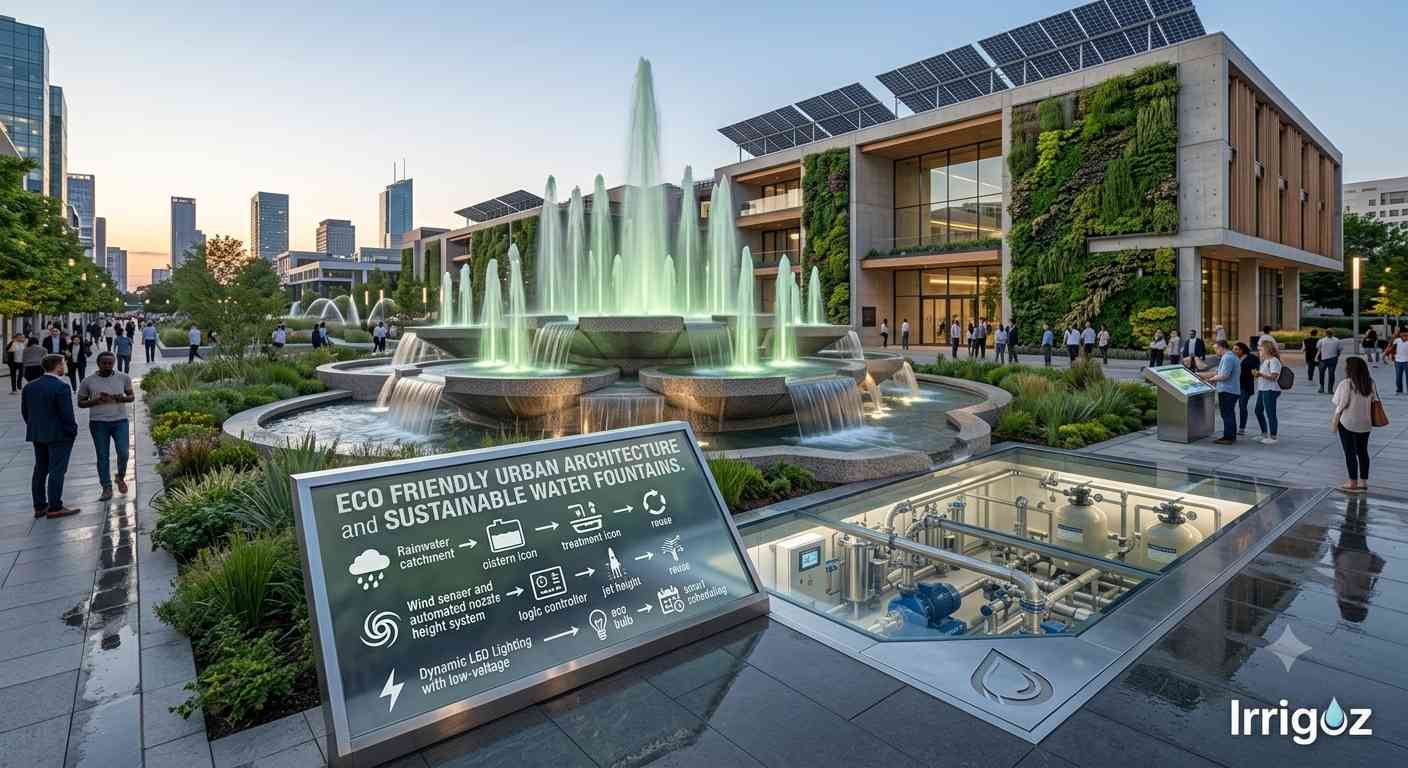
Modern cities are rapidly adopting green building standards to combat climate change and resource scarcity. Consequently, developers must integrate sustainability into every aspect of eco-friendly urban architecture. While large-scale public water features offer immense aesthetic value, they must also be engineered to manage precious water resources responsibly.
Fortunately, innovative engineering solutions now allow commercial fountains to minimize environmental impact. By combining smart architecture with advanced water recycling networks, developers can create stunning landmarks that respect the planet.
1. Rainwater Harvesting and Supplemental Water Supply
One of the most effective ways to design eco-friendly urban architecture is to eliminate reliance on municipal drinking water grids. Large commercial plazas have massive surface areas that collect millions of liters of rainwater annually.
Catchment and Filtration Setup
Instead of letting storm water run into city sewers, engineers divert it through a multi-stage filtration system into specialized underground storage cisterns. This water goes through a purification loop to remove heavy sediments and pollutants. Once treated, it automatically feeds the fountain’s balance tanks. This setup keeps the system running efficiently without tapping into local fresh water pipelines.
Graywater Integration
Furthermore, advanced corporate parks now channel treated graywater from air conditioning condensation units directly into the fountain supply loop. This continuous recycling process ensures that waste water is repurposed productively, drastically lowering the overall utility footprint of the commercial building.
2. Advanced Wind Management and Drastic Evaporation Control
Water loss through evaporation and wind drift is a significant hurdle in public spaces. However, smart automation directly mitigates this waste, ensuring the installation operates efficiently even during peak summer months.
- VFD Motor Tuning: Fountains utilize Variable Frequency Drives (VFDs). When integrated with local digital anemometers, these drives dynamically lower the height of water jets if wind speeds rise. Consequently, water does not drift onto nearby concrete walkways, preventing unnecessary water loss.
- Sub-Surface Splash Protection: In addition, modern splash pads and interactive fountains employ deep sub-surface gravel grids or textured wet decks. These structural features capture splashing droplets instantly, funneling them straight back into the filtration tank before solar heat can cause rapid evaporation.
3. High-Efficiency Energy Management and LED Innovation
True eco-friendly urban architecture balances water conservation with extreme energy efficiency. Traditional commercial fountains utilized high-wattage halogen lighting and single-speed pumps, leading to massive electricity bills.
Transitioning to Low-Voltage LED Systems
Modern commercial layouts exclusively use low-voltage underwater LED fixtures. These systems consume up to 80% less electricity than legacy fixtures while providing superior color customizability.
Smart Pump Scheduling
Furthermore, programmable automation systems ensure that high-horsepower display pumps do not run at full capacity during low-traffic night hours. The system automatically triggers an energy-saving “eco-cascade” mode, which keeps the water moving to prevent stagnation while dropping power consumption by more than 60%.
4. Algae Control Without Harsh Chemical Overdosing
Maintaining crystal-clear water usually requires heavy doses of chlorine. However, excessive chemical use damages the surrounding flora and fauna, conflicting with the core principles of sustainable landscaping.
To maintain an eco-friendly profile, commercial engineering now prioritizes natural and mechanical purification. High-output Ultraviolet (UV) Sterilizers and Ozone Generators are integrated directly into the filtration pipelines. As water passes through these systems, bacteria and organic algae cells are neutralized instantly at a cellular level. This advanced process reduces the reliance on harsh chemicals by nearly 70%, ensuring that any minor wind-drift spray is completely safe for adjacent gardens, trees, and public contact.
Conclusion: Driving the Future of Sustainable Landscapes
In conclusion, embedding eco-friendly urban architecture into public water feature design is no longer an engineering challenge—it is an operational standard. By harvesting rainwater, automating wind-drift controls, and utilizing smart energy-efficient hardware, commercial developments can build breathtaking water features that are both visually spectacular and environmentally responsible.
Want to build a sustainable, green-certified water feature for your next commercial project? At Irrigoz Fountain Design and Installation, we engineer eco-friendly, energy-efficient water management systems tailored for modern urban landmarks. Connect with our sustainable engineering consultants today to design an eco-conscious masterpiece.