

How to Design Water Features for Public Parks and Plazas

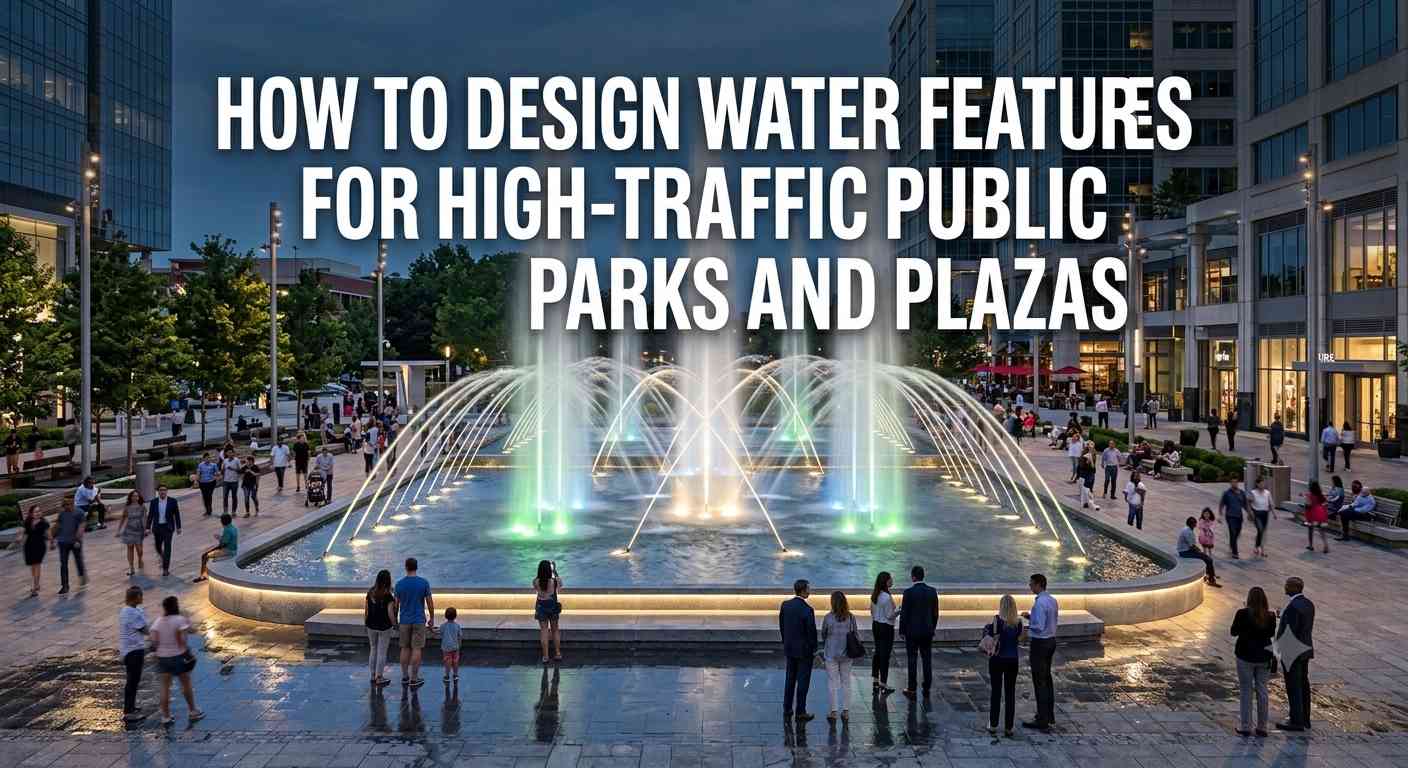
Designing a water feature for a private residential garden is one thing, but engineering an iconic water installation for a high-traffic public space—like a municipal park, a bustling city plaza, or a commercial mega-mall—is an entirely different challenge.
Public water features must balance breathtaking aesthetics with extreme durability, public safety, and smart resource management. When executed correctly, these installations become the beating heart of a city, drawing thousands of daily visitors.
Here is a comprehensive guide on how to design and engineer commercial-scale water features for high-traffic public environments.
1. Prioritizing Public Safety and Interaction
In public spaces, people don’t just look at water—they interact with it. Children run through it, and crowds gather close to its edges. Therefore, safety must be embedded into the initial design phase.
Slip-Resistant Materials & Wet-Deck Grading
For dry plazas or interactive splash pads, the flooring material must feature a high coefficient of friction when wet. Natural textured stones, flamed granite, or specialized anti-slip brushed concrete prevent slip-and-fall accidents. Additionally, sub-surface drainage grading must ensure water drains rapidly without creating deep puddles.
Low-Voltage Submersible Equipment
Public safety demands strict adherence to electrical codes. All submerged architectural LED lighting and sensor systems must operate on low-voltage (typically 12V or 24V DC) configurations, isolated from main power grids via heavy-duty transformers to eliminate any risk of electrical hazards.
2. Robust Commercial Filtration and Water Treatment
High-traffic spaces mean high levels of contamination. Dust, wind-blown debris, organic matter, and direct human contact rapidly degrade water quality if the mechanical infrastructure isn’t designed for heavy loads.
- High-Rate Sand & Glass Media Filters: Unlike small residential filters, public fountains require heavy-duty, high-rate commercial filtration loops capable of turning over the entire water volume multiple times per hour.
- Automated Chemical Dosing & UV Sterilization: To protect public health, commercial water features must utilize automated sensor-driven chlorination or bromination systems. Integrating Secondary UV (Ultraviolet) sterilizers ensures harmful pathogens and bacteria are neutralized instantly without over-relying on heavy chemical odors.
3. Managing High-Traffic Hydraulics and Surge Tanks
The water you see dancing in a public plaza is only half the story; the real magic happens underground. High-traffic fountains face displacement challenges—when hundreds of gallons of water are surging through the air or being splashed out by visitors, the system needs to compensate instantly.
[Main Fountain Pool] ---> (Overflow & Perimeter Grates) ---> [Underground Surge Tank] ---> (Filtration & Pumps) ---> [Back to Nozzles]
An underground Surge Tank (or balance tank) is critical. It acts as a reservoir that holds excess water when the fountain is turned off and supplies extra water when the pumps launch massive vertical jets. Proper hydraulic calculations ensure that the pumps never run dry due to heavy wind drift or splash-out.
4. Wind Control and Smart Environmental Automation
One of the biggest mistakes in public plaza fountain design is failing to account for local weather conditions, specifically wind. A massive 30-foot jet looks spectacular on a calm day, but under high winds, it can drench nearby pedestrian walkways, outdoor cafes, and structural facades.
Integrating Anemometers (Wind Sensors)
Modern commercial fountains use smart PLC (Programmable Logic Controller) systems integrated with digital anemometers. When wind speeds breach a predetermined threshold, the controller automatically commands the Variable Frequency Drives (VFDs) to lower the pump pressure, reducing jet heights or shifting the water pattern to a lower-profile cascade. Once the wind subsides, the fountain automatically returns to its full display.
5. Vandal-Resistant & Heavy-Duty Hardware Selection
Public installations are unfortunately prone to heavy wear and tear, and occasionally, vandalism. Standard commercial materials will not survive in high-traffic city plazas.
Marine-Grade Stainless Steel (316L)
All exposed hardware—including fountain nozzles, suction grates, overflow plates, and light fixtures—must be cast in marine-grade 316L stainless steel. This material resists corrosion from heavily treated water and withstands physical impacts.
Flush-Mounted, Tamper-Proof Designs
In interactive plazas, nozzles and lights should be flush-mounted into the stone deck using tamper-proof security screws. This prevents pedestrians from tripping over equipment and stops unauthorized removal or adjustment of the fountain components.
Conclusion: Engineering Landmarks that Last
Designing a high-traffic public water feature requires a seamless marriage between artistic architecture and heavy industrial engineering. By planning for public safety, high-load filtration, smart wind automation, and structural durability, urban planners can create iconic blue spaces that elevate city life for generations to come.
Ready to design a landmark water feature for your next public project? At Irrigoz Fountain Design and Installation, we engineer durable, technologically advanced commercial water features for public parks, corporate plazas, and mega real estate developments. Connect with our senior engineering consultants today to discuss your project requirements.